
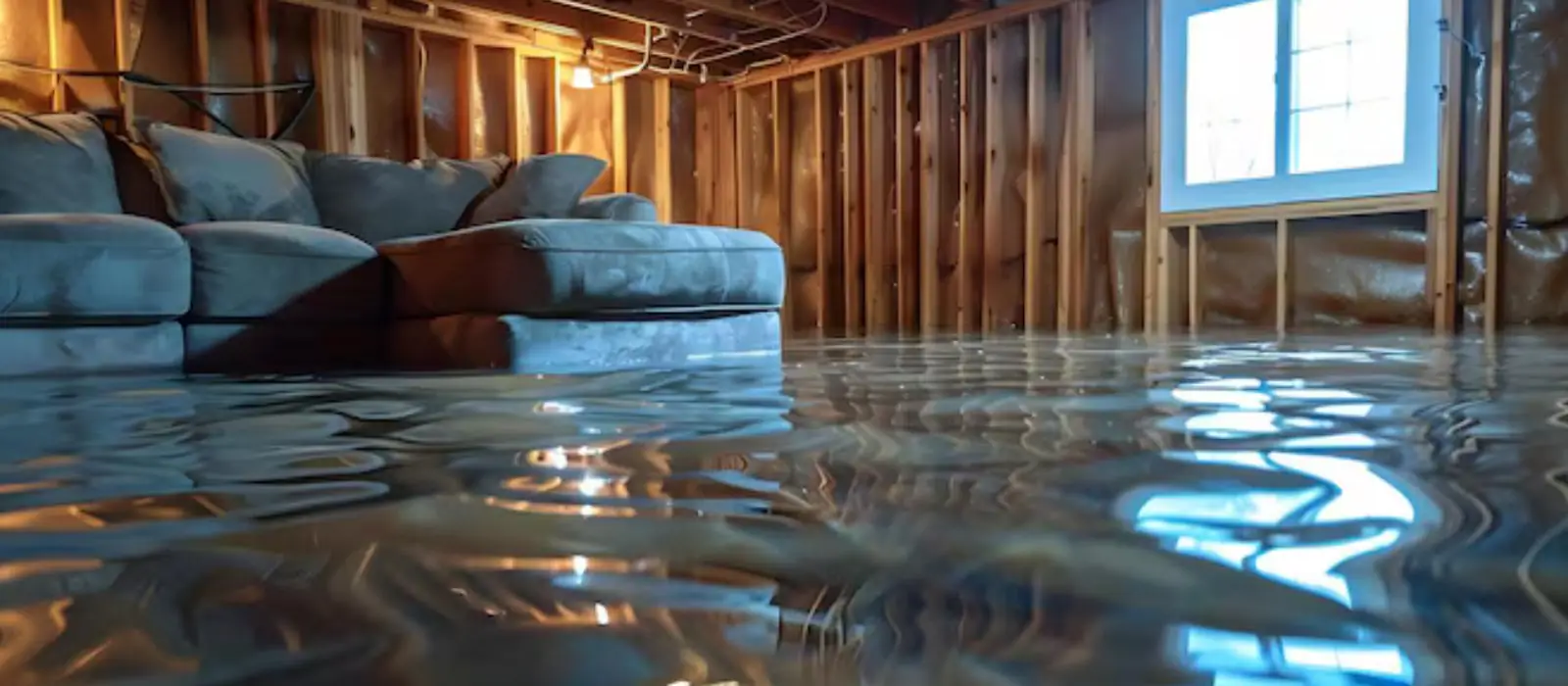
Professional basement flood cleanup services are built around a simple fact: the lowest part of a house collects water and dries slowly. In Apple Valley, whether your home has a true basement, a sunken room, a garage lower than the street or a crawl space, the same logic applies.
This guide explains what a professional job involves, how to judge the water, what to ask a crew and how flood insurance fits in. If water is rising or the electrical panel is near the water, leave the area and call the utility or 911 first.
Step one: safety and the source
Before pumping, the crew checks electrical hazards, gas and structural issues. Standing water can hide live circuits, and a flooded lower level may have a flooded panel. The source is identified as well. A failed pipe is different from storm runoff or a sewer backup.
If water is entering from outside, it may be Category 3 under the ANSI/IICRC S500 standard. That changes everything about what is kept and what is removed. Contaminated flood water carries soil, fuel and bacteria, so porous materials are usually discarded.
Step two: pumping in stages
Pumping too fast can stress walls and floors, especially when groundwater is pressing from outside. Crews generally remove water in stages and watch how the structure responds. Submersible pumps handle depth, and extractors handle what remains in carpet and low spots.
Once the surface water is out, the job shifts to what is still wet. Moisture meters and thermal imaging find saturated drywall, insulation and framing. Those readings set the plan for tear-out and drying.
Step three: tear-out, cleaning and drying
| Stage | What happens | Why |
|---|---|---|
| Tear-out | Wet carpet, pad, drywall and insulation are removed | Porous materials hold contamination and water |
| Cleaning | Surfaces are cleaned with detergent, then treated with an antimicrobial | Removes soil and bacteria from what stays |
| Drying | Air movers and dehumidifiers run with logged readings | Dries framing, slab and any remaining wood |
| Air treatment | HEPA air filtration where odor or debris is present | Controls dust and odor during the work |
| Verification | Final readings compared with unaffected areas | Confirms the dry standard before rebuild |
Lower levels dry slowly. Plan on days, not hours, and expect equipment to stay until readings say otherwise. The drying stage follows the same principles as water mitigation.
Flood water in a lower level?
Call (760) 769-1159 any hour. We explain the scope and price before work starts.
Questions to ask any crew
- Do you work to the ANSI/IICRC S500 standard, and what will you document?
- How will you check for hidden moisture in the framing and slab?
- How will you handle contaminated water and what will be discarded?
- What equipment will you place and how often will readings be taken?
- What is the written scope, and what is excluded?
- How will you coordinate with my insurer?
A good crew answers these plainly and in writing. A crew that will not put readings on paper is not worth hiring.
Apple Valley local note: flood maps, the river and insurance
Flood risk is specific to an address. The FEMA Flood Map Service Center lets you look up your property, and the Town of Apple Valley can answer questions about drainage on your lot. The Mojave River borders the west side of town, and washes and low-lying lots carry runoff during heavy rain.
Heavy rain is not frequent here, but it happens. The National Weather Service noted torrential rainfall across mountain and desert communities during Tropical Storm Hilary in 2023. If your lower level flooded then, ask your insurer whether the loss was reported and what your policy allowed.
The California Department of Insurance says flood insurance covers events not usually covered by standard homeowners insurance, that a new policy takes effect 30 days after signing and that it generally does not cover damage from inside the home, such as burst pipes. See FloodSmart.gov for details. For homes in Victorville or Adelanto, the flood map lookup works the same way.
Belongings after a flood
Furniture, boxes and stored items are the other half of a flood job. Sort them into three groups. Items that can be cleaned and dried, such as hard plastic, metal and glass, are the easiest. Items that need specialist care, such as photographs, documents and some electronics, should be set aside and kept cool and dry. Items that soaked up contaminated water, such as upholstered furniture and mattresses, are usually discarded.
Photograph everything before it is moved, and keep a list with approximate ages and values. Do not turn on electronics that were in the water. Ask a restoration company whether pack-out and off-site cleaning are available if you have items of value.
Paper and photos can sometimes be saved if they are dried promptly, so do not throw them out in a rush. Lay them flat on a clean dry surface, and ask for help with anything irreplaceable.
What to do before help arrives
- Do not enter standing water if outlets, cords or the panel may be wet, and call the utility or 911
- Do not touch wet electronics or run a wet-dry vacuum on a flooded floor unless it is rated for it
- Shut off the water if a supply line is the source
- Photograph the water line and damaged items before moving anything
If the water came from a sewer backup or outside flooding, treat it as contaminated and keep children and pets out.
What the first week usually looks like
Day one is extraction, safety checks and tear-out. Days two through four are about drying, with equipment running around the clock and a crew checking readings on each visit. Expect noise, warmth and a house that feels sealed up, since open windows slow drying.
Toward the end of the week, readings are compared with unaffected areas. When the numbers match, equipment comes out and rebuild planning begins. Larger or slower-drying losses take longer, and your crew should tell you why in plain terms.
Cleanup is not waterproofing
Professional flood cleanup repairs and dries what the water damaged. It does not stop water from coming back. If groundwater, grading or a foundation problem lets water in, a drainage or waterproofing specialist addresses that. We say so when it applies.
After drying, water damage repair rebuilds what was removed. If the flood involved sewage, see flood damage restoration for the full process.
Frequently asked questions
Do most Apple Valley homes have basements?
Homes vary, and some have crawl spaces, lower garages or slabs instead. The same cleanup principles apply to any low area where water collects.
Can flooded drywall be saved?
After contaminated water it is usually removed. After clean water it can sometimes dry in place if it stays firm and dry readings are reached.
How long does a flooded lower level take to dry?
Usually several days, and sometimes longer. Readings, not a calendar, decide when equipment is removed.
Will homeowners insurance pay for a flood?
Standard policies usually exclude flood, which needs separate flood coverage with a 30 day waiting period according to the California Department of Insurance. Check your policy.
How do I find out if my address is in a flood zone?
Use the FEMA Flood Map Service Center with your address, and ask the Town of Apple Valley about local drainage.