
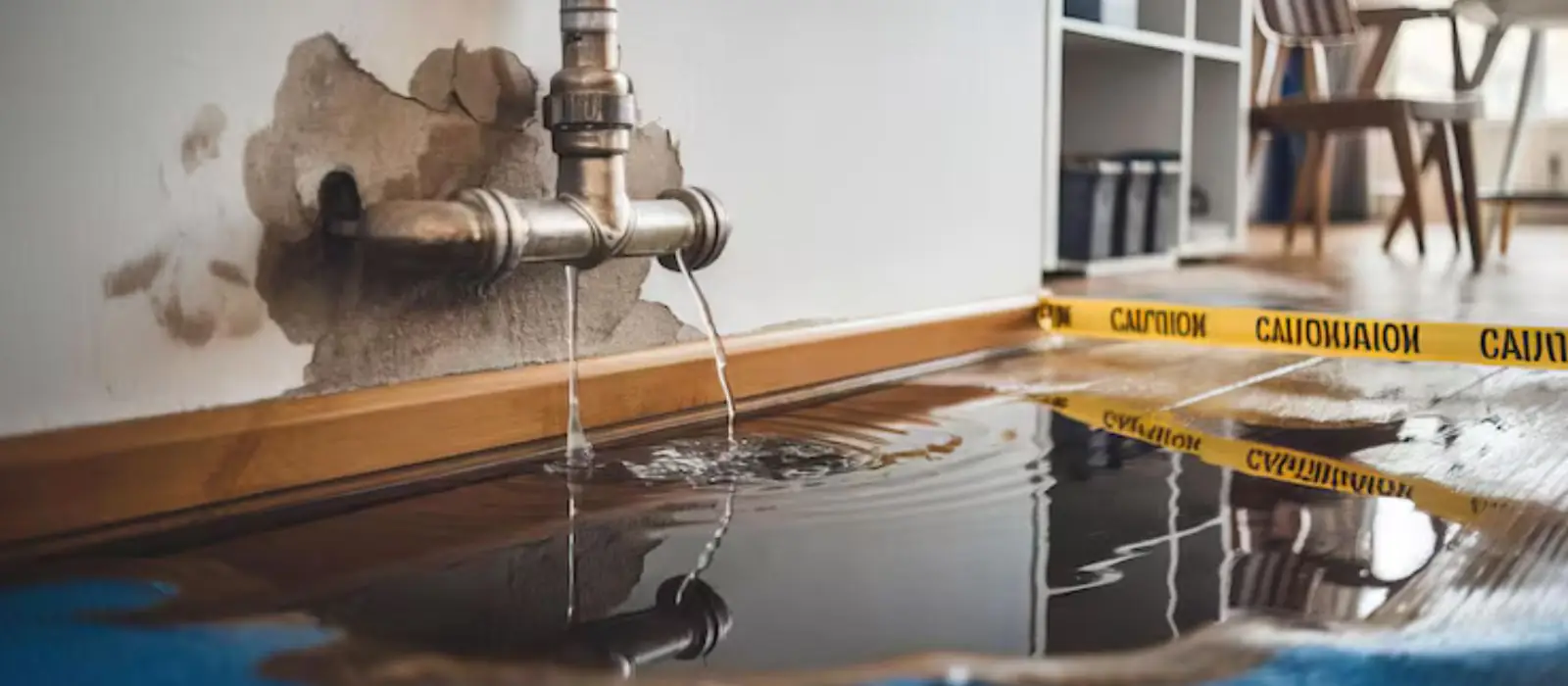
If water is spreading through your Apple Valley home right now, water mitigation is the job that matters first. Our dispatch line is open 24/7, and a crew can be sent the same day when one is available. Mitigation means stopping the damage from growing, which is a different job from repairing what the water already ruined.
While you wait, shut off the main water valve if the source is a supply line or fixture, lift valuables and small furniture off wet floors, and keep people and pets out of any water that may be dirty. If water has reached outlets, light fixtures or the electrical panel, stay out of that room and call the utility or 911 before you call us.
When water is still spreading through your home
Water does not stay where it lands. It moves down through ceilings, sideways through drywall and baseboards, and under flooring into the subfloor. A wet carpet is the part you can see, while the wet insulation inside the wall is the part that turns into a mold and odor problem a few days later.
The first 24 to 72 hours decide how much of the house can be dried in place and how much has to be cut out. That is why mitigation crews arrive with extraction units and drying equipment before anyone talks about paint or new flooring. The order of work is stop the source, remove the standing water, find every wet surface, and start controlled drying.
Safety first around electricity and sewage
Do not wade through water if outlets, cords or the panel may be wet. Cut power only if you can reach the panel while standing on dry ground, and call the utility or 911 for any electrical or gas concern before you call our line. If the water came from a sewer or septic backup, treat it as contaminated and stay out until it has been assessed.
Causes we see in Apple Valley homes
Most mitigation calls start with a failed part, not a flood. A supply line behind a toilet splits, a water heater tank weeps through its base, a washing machine hose lets go, or an air conditioner condensate line backs up and soaks a ceiling. In the High Desert, cooling equipment runs hard for much of the year, so condensate overflows are a steady source of ceiling and closet damage.
Winter nights can drop low enough to threaten exposed pipes in garages, crawl spaces and outside walls. Heavy rain is rare but it does happen. In 2023 Tropical Storm Hilary brought torrential rain to mountain and desert communities across Southern California, according to the National Weather Service, and roofs and drainage that rarely get tested were tested then.
Homes here take their water from a public system. The Town of Apple Valley utilities element names Apple Valley Ranchos Water Company as the primary provider in town, with Golden State Water serving a smaller area. The meter and street valve belong to the utility, and the main shutoff at your house belongs to you, so find it before you need it.
Signs the water has spread further than it looks
- Baseboards that look swollen, or paint that bubbles above a wet floor
- Carpet that feels cool and damp days after the surface looks dry
- A musty smell in a room that was fine last week
- Ceiling stains that grow or darken after the leak is stopped
- Hardwood that cups or buckles at the seams
- Condensation on windows in a closed room with wet materials
A surface that feels dry to the hand can still hold moisture. That is why a proper assessment uses a moisture meter and thermal imaging instead of touch alone, and why the readings are written down at the start so the drying can be proven finished.
How water mitigation works, step by step
- Stop the source. Shut the valve, turn off the appliance or tarp the roof opening so nothing new enters the structure.
- Remove standing water. Submersible pumps, truck-mounted or portable extraction units and wet vacuums pull bulk water off floors and out of carpet pad.
- Map the moisture. Moisture meters and thermal imaging find wet drywall, insulation, subfloor and framing, and the readings become the baseline.
- Remove what cannot dry. Saturated carpet pad, wet insulation and drywall that has lost its strength are cut out so the cavity can dry.
- Dry with controlled airflow. Air movers and LGR or desiccant dehumidifiers pull moisture out of the structure while readings are logged each visit.
- Confirm dry standard. Final readings are compared with unaffected materials in the same home before equipment is removed.
This sequence follows the ANSI/IICRC S500 standard for professional water damage restoration. It is a good habit to ask any company whether its crews work to S500 and what readings they will show you when the job is done.
Structural drying: what happens after the water is gone
Structural drying is the longest part of a mitigation job and the part most homeowners never see done well. Once bulk water is out, the water that remains is inside the materials, in the studs, the sill plate, the subfloor and the back face of the drywall. Air movers push dry air across those surfaces and dehumidifiers pull the moisture out of the air so it can keep moving.
Most small and medium losses take several days of drying, and a crew checks readings at each visit instead of guessing. Equipment placement changes as areas reach their target. A closed, warm room dries faster than one where doors and windows are open, so you may be asked to leave the house sealed even though it feels loud and warm.
Class and category set the plan. A clean supply-line leak in a single room is different from a loss that wicked through several rooms, and water that has sat for days is treated differently from water that was removed quickly. Your assessment should name the class of loss, the category of water and the number of drying days expected, in writing.
Wet materials left alone make the job bigger
Call dispatch at (760) 769-1159 and describe what the water has reached. We will explain what mitigation involves for your situation.
Wet walls, damp carpet and a musty smell: is that mitigation?
Many people do not search for water mitigation. They search for a damp wall, a wet carpet that will not dry or a smell that showed up after a leak. If any of that describes your home, the problem is moisture trapped in materials, and drying it out is mitigation by another name.
The sooner the moisture is found and removed, the less likely it is to feed mold in the wall cavity. If a smell is already present, read about mold remediation as well, because mitigation dries the building and remediation deals with growth that has already started.
How water mitigation fits with cleanup and repair
Mitigation is the first of three stages. After drying is confirmed, water damage cleanup removes debris, sanitizes surfaces and deals with odors, and water damage repair rebuilds drywall, flooring and paint. If the loss started with standing water on the floor, emergency water removal is the extraction step that comes first.
Keeping these stages separate matters for the insurance file as well. Mitigation invoices, drying logs and photos document the emergency work, and the repair estimate comes afterward once the structure is dry and the full scope is known.
What affects the cost of water mitigation
We do not quote a number sight unseen because the same leak can be a small job or a large one. Scope and price are explained before work starts, after an on-site assessment. These are the factors that move the figure.
| Factor | Why it matters |
|---|---|
| Water category | Clean supply water is simpler to handle than gray water or sewage, which adds removal and sanitizing. |
| Square footage affected | More wet floor and wall area means more extraction, more equipment and more monitoring. |
| Materials involved | Carpet and pad, hardwood, tile over slab and drywall each dry differently and some cannot be saved. |
| Drying days and equipment | Air movers and dehumidifiers are counted by unit and by day, and large or slow-drying losses need more. |
| Time since the loss | Water left for days spreads and soaks deeper, which can add demolition and drying time. |
Insurance is a separate question. Sudden and accidental water damage is often covered, while gradual leaks and neglect often are not, and flood damage is usually excluded and needs separate flood coverage. Check your policy and ask your insurer before you assume either way. The California Department of Insurance advises you to make temporary repairs to prevent further damage and to keep a log of calls and correspondence.
Want your real number? Call (760) 769-1159 and we will walk through the scope with you.
Serving Apple Valley and the nearby High Desert
Crews work from the Highway 18 corridor, and the 92307 and 92308 ZIP codes cover the whole town from the Mojave River on the west side to the neighborhoods along Bear Valley Road. We also dispatch to Victorville, Hesperia and Adelanto when a loss there needs mitigation.
Permit and inspection questions for rebuild work go to the Town of Apple Valley Building and Safety Division at the Permit Center. Permit rules vary by project, so ask them before demolition goes beyond drywall and flooring.
Frequently asked questions
Do you handle water mitigation emergencies at night or on weekends in Apple Valley?
Yes. Dispatch is answered 24 hours a day, every day, including nights, weekends and holidays. A crew is sent the same day when one is available, and the dispatcher will tell you what to do while you wait.
What is the difference between water mitigation and water damage restoration?
Mitigation stops the damage from spreading by removing water and drying the structure. Restoration is the full path back to a finished home, which also includes cleanup and repair.
How long does structural drying take?
Most small and medium losses need several days, and larger or slower-drying losses take longer. Readings are logged at each visit and equipment comes out only when materials reach the dry standard.
Can I rent air movers and dehumidifiers instead?
Equipment sizing and placement drive the result, and rental units without moisture readings often leave wet framing behind. We do not offer equipment rental, and a mitigation job includes the monitoring.
Do I need to leave my home during mitigation?
Often you can stay in unaffected rooms, but contaminated water, loud equipment and containment may make parts of the house unusable. Ask your insurer about additional living expenses if you must move out.
Will you work with my insurance company?
We document the loss with photos, readings and a written scope you can give your adjuster. Coverage decisions belong to your insurer, so check your policy and ask them directly.