
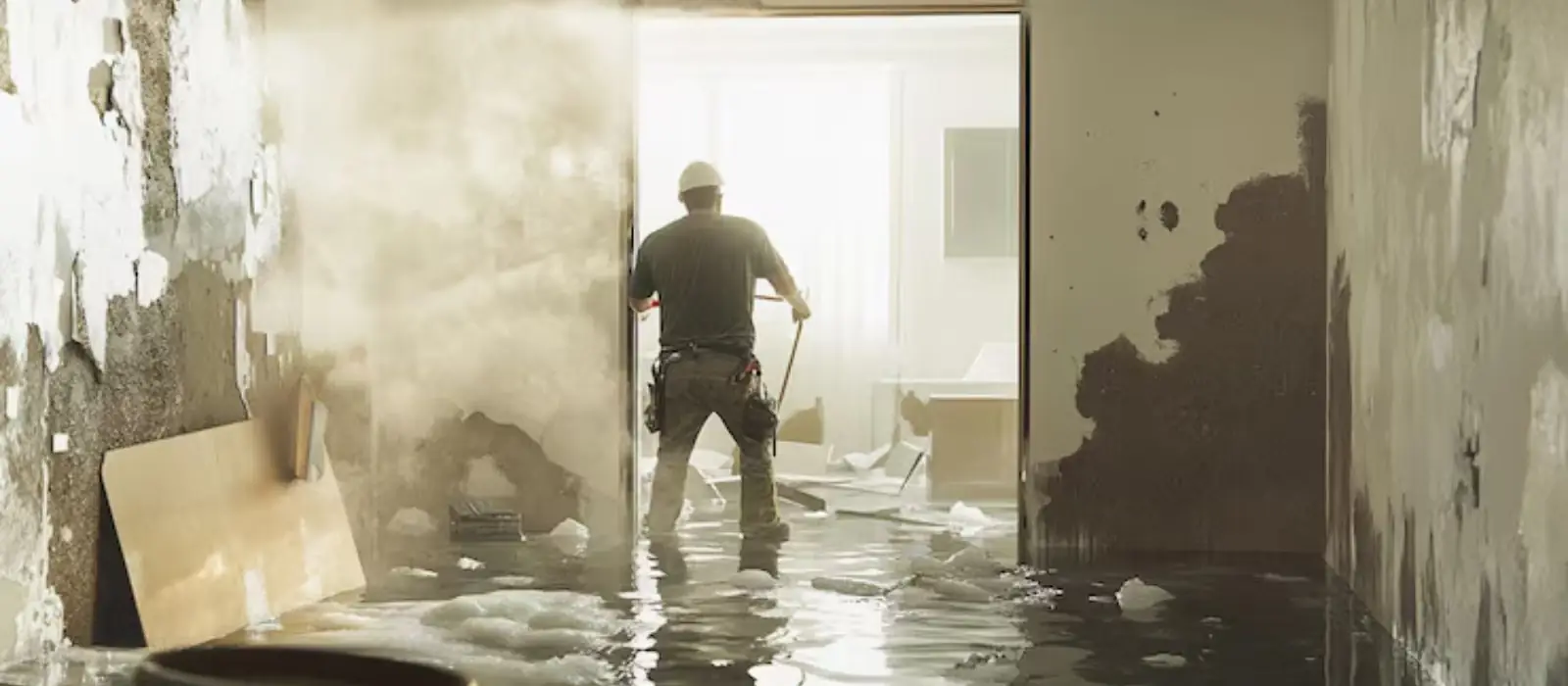
Water damage repair in Apple Valley is the rebuild that follows a leak, a flood or a failed appliance. It covers the work you can see: patched ceilings, new drywall, replaced flooring, trim, cabinets and paint. The rule that decides everything is simple, which is that repair starts only after the structure is dry.
Calling about a ceiling stain or a soft spot in the wall is a good place to start. We explain the scope and price before any work starts, and we will tell you if the first step should be drying instead of patching.
Why drying has to come first
Paint over a damp wall hides the stain and traps the moisture. The stain returns, the paint peels and mold can grow behind it. A repair that skips drying is the most common reason a patch fails within months.
Moisture meters give a number, and a repair plan should be based on that number rather than on how dry the surface feels. If the readings are not at the dry standard, the right move is more drying, then repair. Our water mitigation work includes the final readings you need to proceed.
Ceiling and wall water damage repair
Ceiling and wall repairs are the most common calls. A roof leak, a bathroom supply line or a condensate line leaves a brown ring, a bubble in the paint or a sagging section of drywall. The visible stain is only the start of the assessment.
Sagging drywall holds water and can fail without warning. A crew will release trapped water in a controlled way, cut out the wet section, check and dry the insulation above it and confirm readings before closing the opening. The patch is then taped, textured to match the surrounding finish and primed with a stain-blocking product before paint.
Matching texture matters because many homes have a sprayed or knockdown ceiling texture, and a flat patch stands out under a window or a light. A repair plan should say how the texture will be matched and whether the whole ceiling needs repainting for a clean finish. A water-stained ceiling that has stopped growing still needs the source found, because a stain with no active leak is easy to mistake for a finished repair.
- Mark the edge of the stain with a pencil and date it, so you can tell if it grows
- Photograph the ceiling and the room above it before any work starts
- Do not paint over a stain until the cause is fixed and the area reads dry
- Keep any leaked-on items for your insurer until the claim is settled
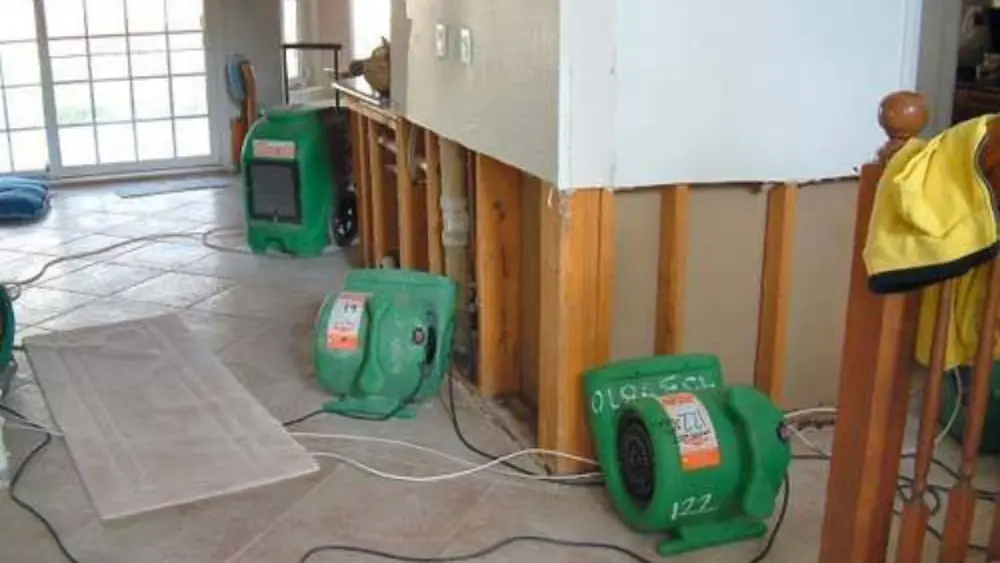
Floors: carpet, laminate, tile and hardwood
Flooring decides much of the cost of a water repair. Carpet and pad that were soaked by clean water can often be dried, while pad is commonly replaced. Laminate swells at the seams and rarely recovers, and engineered or solid hardwood may cup as the boards take on moisture.
Cupping, where board edges rise higher than the center, is a sign the boards are wetter on the bottom than the top. Pushing a repair too soon can lock in the shape. Hardwood is usually dried slowly with specialty equipment, readings are tracked for days and sanding or board replacement waits until the moisture content is stable.
Tile over a slab is more forgiving, but water can still run under the tile or into the wall base. Grout lines that darken after a leak, tiles that sound hollow or a baseboard that stays damp point to wet material underneath.
Cabinets, trim, insulation and finishes
Kitchen and bath cabinets absorb water at the toe kick first, where particle board swells and sheds its laminate. Solid wood doors can often be saved while particle board boxes seldom survive a long soak. Base trim is usually replaced, and insulation that was wet is removed and replaced after the cavity dries.
Painting is the last step, not the first. Primer and paint go on after all patches, texture and repairs have cured and moisture readings are verified.
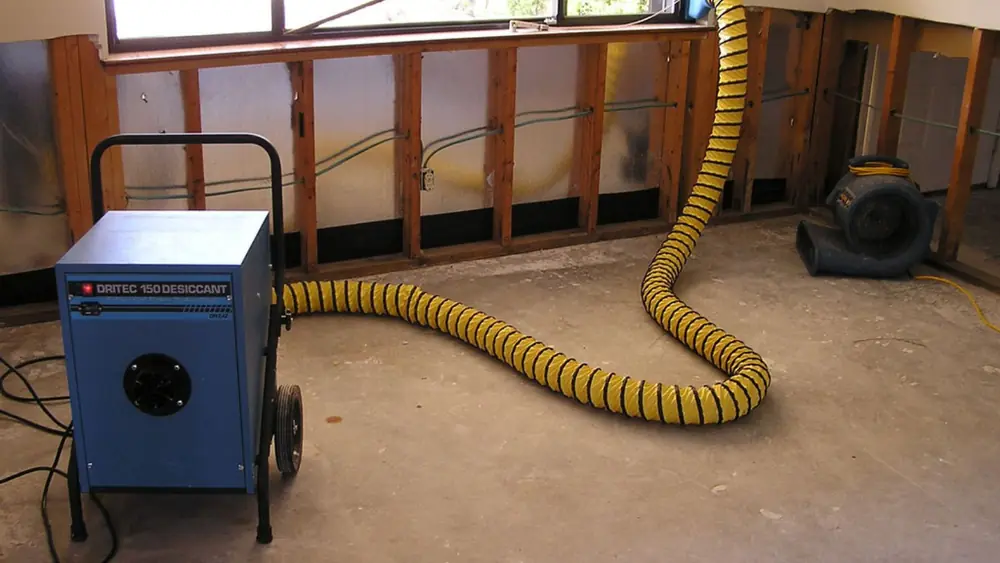
Repair options and honest trade-offs
| Option | Good when | Trade-off |
|---|---|---|
| Spot patch | A small, dry section of damage with a known, fixed source | Texture and paint match can be hard on large ceilings |
| Section replacement | A wall or ceiling area that lost strength or has sagged | More demolition, better long-term result |
| Full room rebuild | Damage across floors, walls and ceiling in one room | Longer timeline and higher scope, cleaner finish |
| Tear-out only | You plan to hire your own finishing contractor | You manage the rebuild and the schedule |
We will lay out the options for your home and say which one we would choose and why. If a repair is outside what we do, we will say so honestly.
Not sure whether it is dry enough to repair?
Call (760) 769-1159. We will explain what to check and how repair work is scoped before it starts.
Water damage repair cost and permits
Repair cost depends on how much of the home is affected and how it was built. The factors that matter most are listed here, with no figures until someone has seen the damage.
| Factor | What changes the price |
|---|---|
| Area affected | Number of rooms, wall and ceiling area and floor area |
| Materials | Drywall, texture, flooring type, cabinets and trim |
| Finish level | Matching existing texture, paint and flooring lines |
| Hidden damage | Wet insulation or framing found after opening a wall |
| Permits and inspection | Whether the scope reaches work the Town requires a permit for |
Permit rules vary by project, so ask the Town of Apple Valley Building and Safety Division, which handles plan review and inspections through the Permit Center. Ask before you start any work beyond drywall and surface finishes.
On insurance, sudden and accidental damage is often covered and gradual leaks and neglect often are not. Check your policy, take photos before repair and keep every invoice. Want your real number? Call (760) 769-1159 and we will go through the scope.
Repairs across Apple Valley and nearby towns
Repair crews work in the 92307 and 92308 ZIP codes and can also take jobs in Victorville, Hesperia and Adelanto. If the damage came from a flood, the earlier work is described under flood damage restoration.
A repaired home should look like nothing happened. If you can still see the outline of the patch or smell dampness after the work, ask for a recheck of the readings.
Frequently asked questions
How long after a leak can water damage repair start?
Repair starts after the structure reaches the dry standard, which may be within days for a small leak or longer for a bigger loss. Moisture readings should be written down, not guessed.
Can you match my existing ceiling texture?
Texture matching depends on the type and age of the finish. We explain what is realistic before work starts, including when repainting the full ceiling gives a cleaner result than a patch.
Will my hardwood floor need to be replaced?
Not always. Boards that cup after clean water can sometimes flatten as they dry, and sanding comes later. Boards that are warped, split or stained by contaminated water are usually replaced.
Is a water stain on the ceiling always a sign of mold?
No, but a stain that stays damp, spreads or smells musty deserves a closer look. Mold health questions belong to a physician, and our mold remediation page explains the testing and removal side.
Do I need a permit for water damage repair?
It depends on the work. Surface repairs and drywall usually differ from structural, electrical or plumbing changes, so ask the Town of Apple Valley Building and Safety Division before you start.
Do you do the rebuild, or only the drying?
We handle drying, cleanup and the rebuild for water losses. If a specialty trade is needed, we say so up front and explain how the work is coordinated.