
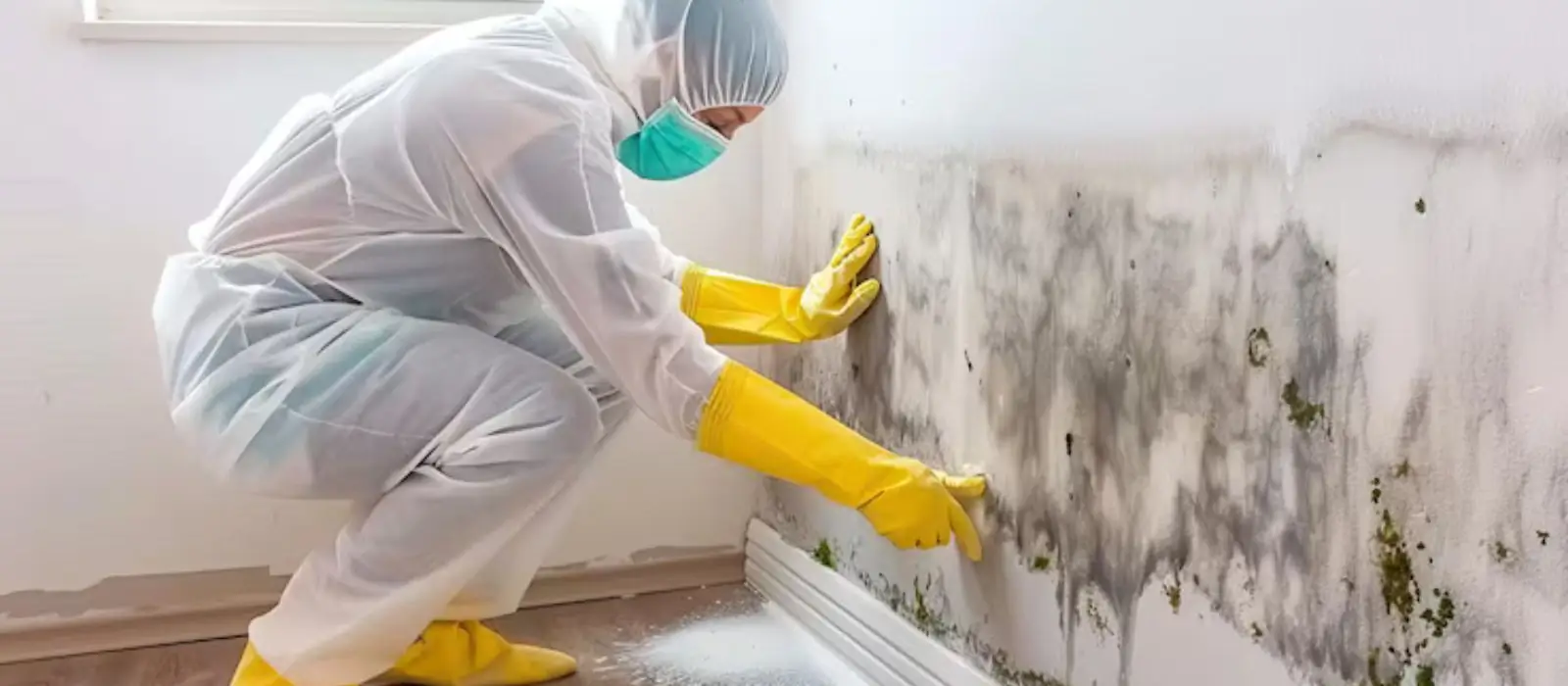
Mold remediation in Apple Valley starts with a simple fact, which is that mold needs moisture to grow. Finding and stopping that moisture comes before any scrubbing, spraying or removal. Our line is open 24/7 and we explain the inspection and scope before work starts.
Most calls we hear follow the same pattern. A toilet, sink or air conditioner condensate line leaked weeks ago, the water seemed handled, and now there are spots in a closet corner, a ceiling or the edge of a shower wall. This page explains how the work is done and what to ask before you hire anyone.
Spots, a musty smell or discolored drywall: what it usually means
People rarely search for remediation first. They search for dark spots on the ceiling, a musty smell in a closet or a wall that looks damp. Those signs often mean that a material stayed wet long enough for growth to start.
- Dark, fuzzy or speckled patches on drywall, caulk or grout
- A musty smell that returns after cleaning
- Paint that bubbles or peels near a past leak
- Staining around the corner where a wall and ceiling meet
- Visible growth on the underside of a cabinet or in a closet where furniture sat against a wall
Not every dark mark is mold, and only testing and inspection can say what is growing. Questions about health effects belong with a physician. What we can do is find the moisture, assess how far the growth extends and remove it safely.
Why mold follows a water loss
Mold spores are in most indoor air. They grow when a material such as drywall paper, wood or insulation stays wet. Commonly cited guidance is to dry wet materials within 24 to 48 hours, which is one reason fast water mitigation matters.
In the Apple Valley area, the leaks behind mold calls tend to be small and slow rather than dramatic. A condensate line that clogs, a shower pan that seeps, a roof leak above a closet, a plumbing line behind a vanity or a window that sweats all feed a hidden wall. The moisture source must be fixed or the growth returns.
Dry desert air does not protect a wall cavity. Inside a bathroom wall or a closed closet, the humidity can stay high for weeks after a leak even when the rest of the house feels dry.
Mold inspection and clearance testing
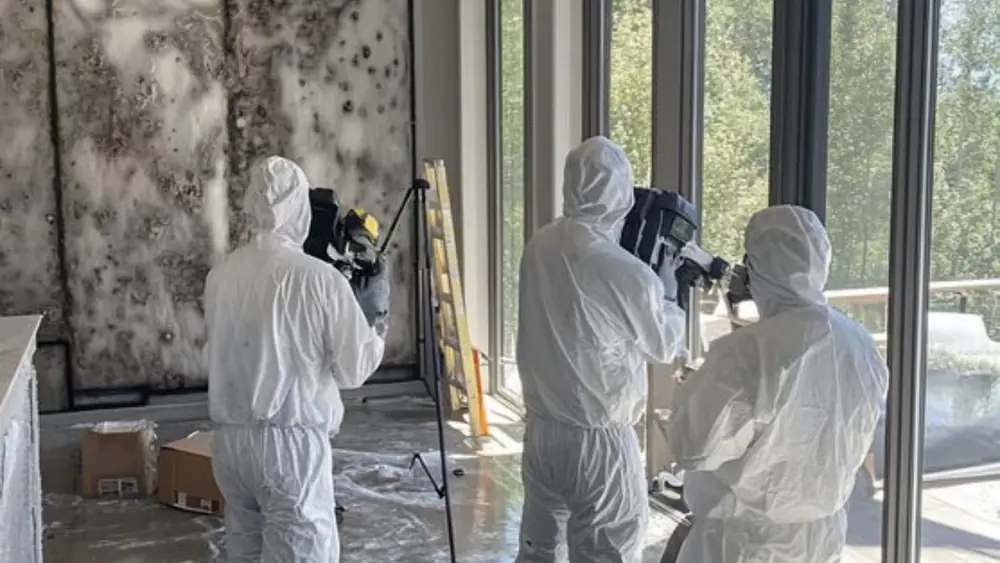
A mold assessment looks at the visible growth, the moisture readings, the building materials and the likely source. Moisture meters and thermal imaging help locate wet areas that are not visible, and the inspector may recommend sampling to identify what is present.
Independent clearance testing is done after remediation to confirm the area is clean and the work meets the plan. The tester should be independent from the company that did the removal, which is the point of having a second set of eyes. Ask whoever you hire how clearance is handled and who does it.
Real estate transactions bring this up often. A buyer or a lender may ask for mold to be removed and cleared before closing. We can explain the scope and the testing steps. Acceptance by a lender or agent is up to them, and we do not promise outcomes.
Not sure whether it is mold or staining?
Call (760) 769-1159 and describe what you see. We explain the inspection and scope before any work starts.
How mold remediation is carried out
The ANSI/IICRC S520 standard describes professional mold remediation, and it is reasonable to ask any company whether its crews work to it. A typical job follows these steps.
- Fix the moisture source. Repairs to the leak come first, otherwise cleaning is wasted.
- Set containment. Plastic barriers and negative air keep spores from spreading through the house.
- Filter the air. HEPA air filtration runs during the work.
- Remove affected materials. Porous materials with growth, such as drywall and insulation, are cut out and bagged.
- Clean what stays. Framing and hard surfaces are HEPA vacuumed and cleaned.
- Dry and verify. Moisture readings confirm the area is dry before it is closed.
- Rebuild. Drywall, insulation and finishes go back once clearance is complete.
Bleach spray and fogging are not a substitute for removal. Surface cleaning alone leaves growth inside porous material, and we will explain what your situation needs.

Mold removal and black mold cleanup
Black mold is a color, not a diagnosis. Several kinds of mold look dark, and color alone does not tell anyone what species is present or what it means for your home. The cleanup approach is the same for any growth, which is containment, removal of affected porous material and cleaning of surfaces that remain.
Small areas on a hard, non-porous surface, such as tile, can sometimes be cleaned by a homeowner with appropriate protection. Growth on drywall, insulation, carpet or larger than a modest patch usually needs professional work. If you are unsure, call before disturbing the area, because scrubbing spreads spores.
Mold after water damage
If you already had a leak, flood or sewage loss, the mold risk depends on how fast the structure dried. Readings should confirm dry materials, not just dry surfaces. If you had a loss and a smell shows up days later, there may be wet material that was missed.
Mold after a loss ties directly to water damage cleanup and to flood damage restoration, because those jobs remove the materials that feed growth. When mold is present, remediation comes before the rebuild covered under water damage repair.
Costs, insurance and licensing
| Factor | Why it matters |
|---|---|
| Area affected | More wall, ceiling or floor area means more containment and disposal |
| Materials | Drywall, insulation and framing need different treatment |
| Access | Attics, crawl spaces and tight closets slow the work |
| Testing | Inspection and clearance testing are separate from removal |
| Moisture repair | Fixing the leak is a separate trade and cost |
Insurance varies. Some policies cover mold that results from a covered water loss and some exclude or limit it, so ask your insurer before work begins. Mold licensing rules are set at the state level and change, so ask whether your state licenses mold work and request that any company show you what applies.
We never promise that mold will not return, because that depends on moisture in your home after we leave. Want your real number? Call (760) 769-1159 and we will explain the scope.
Mold services in Apple Valley and nearby towns
Remediation crews work across the 92307 and 92308 ZIP codes, along with Victorville, Hesperia and Adelanto. Ask the Town of Apple Valley Building and Safety Division whether your rebuild needs a permit.
Frequently asked questions
How do I know whether it is mold or just staining?
You cannot tell by sight alone. A moisture reading and, if needed, sampling identify what is present. Call before scrubbing, because disturbing growth spreads it.
Do I need clearance testing after remediation?
It is a good idea, and buyers and lenders sometimes require it. Ask for independent clearance, meaning a tester who is not the company that did the removal.
Can I just spray bleach on mold?
Spraying does not remove growth that has entered porous materials such as drywall. Professional remediation removes or cleans the material and fixes the moisture.
How long does mold remediation take?
Small jobs can finish in a few days, and larger ones take longer. Drying, containment and clearance affect the schedule more than the removal itself.
Will my insurance cover mold removal?
It depends on the cause and the policy language. Check your policy and ask your insurer before work begins.
Is water damage restoration the same as waterproofing?
No. Restoration repairs and dries damage. Waterproofing and foundation work are specialty trades, and we say so honestly when that is what a property needs.