
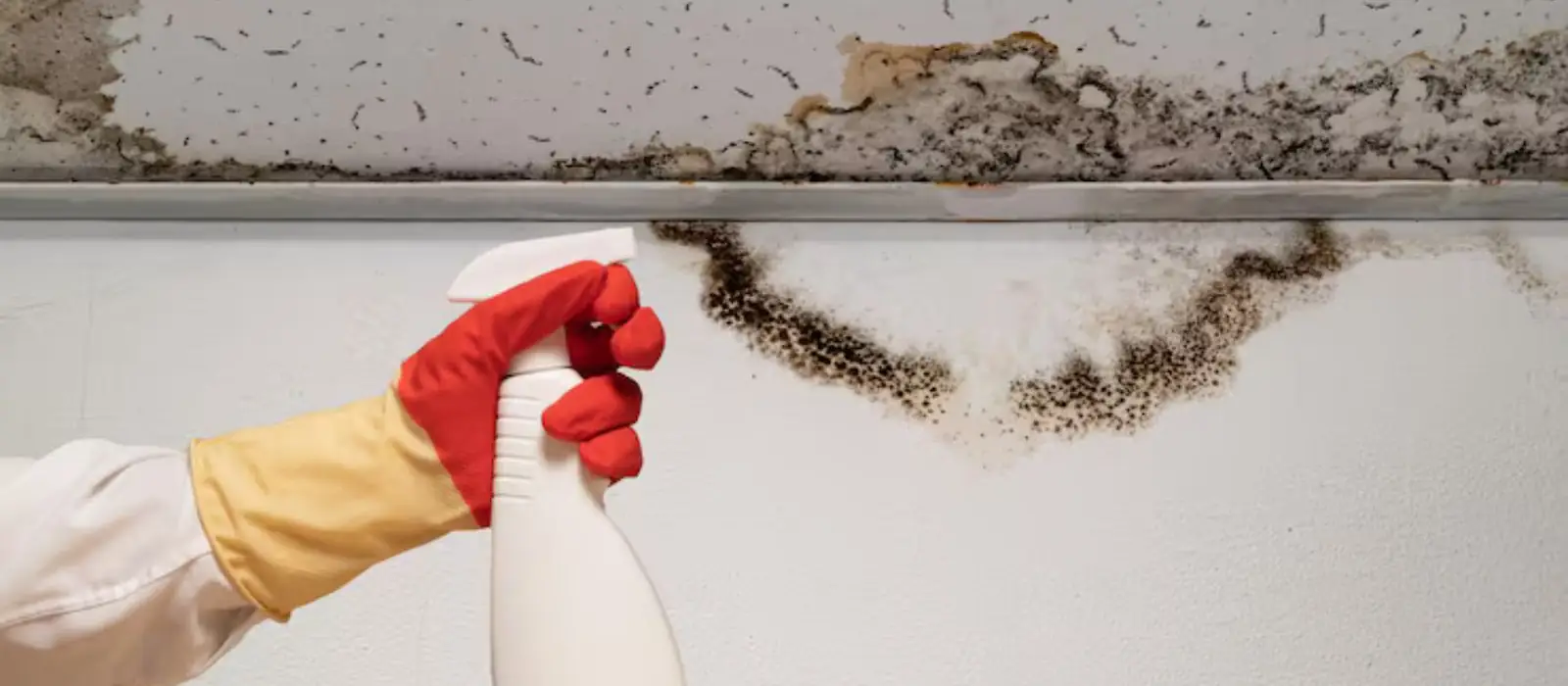
Black mold on a bathroom ceiling is a common worry, and the dark spots are usually the first sign homeowners notice. In Apple Valley, where homes are often dry, a bathroom is one of the few rooms that stays humid, which is why growth shows up there first.
Black mold is a color, not a diagnosis. Several kinds of mold look dark, and color alone does not identify what is growing. This guide explains why spots form on bathroom ceilings, how much a homeowner can clean and when to bring in a professional. Health questions belong with a physician.
Why bathroom ceilings grow spots
Mold needs moisture and a surface to grow on. A bathroom provides steam from showers, cooler ceiling surfaces where moisture condenses and often weak ventilation. Over time a film of moisture and soap residue gives mold what it needs.
- An exhaust fan that is weak, clogged or vents into the attic instead of outdoors
- Showers that run long without the fan on
- A roof leak or a plumbing line above the ceiling
- An upstairs shower or tub that leaks into the ceiling below
- Cold spots from poor insulation where steam condenses
Figuring out the moisture source is the key. Cleaning the spots without fixing the moisture is a short-term fix at best.
Surface spotting or a leak behind the ceiling?
| Clue | Points to surface condensation | Points to a leak |
|---|---|---|
| Location | Corners, around the fan, edge of the shower area | Under a plumbing run or roof valley |
| Pattern | Light, speckled spots | Dark, spreading stain with a ring |
| Texture | Surface is firm | Drywall is soft or sagging |
| Timing | Worse after showers | Changes with rain or use of fixtures above |
| Smell | Slight, localized | Strong, musty, spreads through the room |
A moisture meter on the ceiling answers the question quickly. If the ceiling reads wet away from the shower, there is a leak, and that is the first problem to solve.
How much can a homeowner clean?
The U.S. Environmental Protection Agency says that if the moldy area is less than about 10 square feet, you can in most cases handle the job yourself. For hard surfaces, it advises scrubbing mold off with detergent and water and drying completely. It also says absorbent or porous materials, such as ceiling tiles and carpet, may have to be thrown away if they become moldy.
Painted drywall ceilings are in the middle. A light surface film on a firm ceiling can sometimes be cleaned. If the spots return, the drywall is soft or the area is large, the material is affected and needs to be removed. The EPA also says not to paint or caulk moldy surfaces, because paint applied over moldy surfaces is likely to peel.
Check before you scrub
Disturbing mold can spread spores through the room. The EPA advises consulting a health professional before starting cleanup if health concerns are present, and it advises calling a professional for larger areas or any water damage involving contaminated water.
Spots larger than a doormat, or a damp ceiling?
Call (760) 769-1159. We explain the inspection and scope before work starts.
When containment and testing make sense
Professional remediation uses containment to keep spores from spreading, air filtration during the work and removal of affected drywall. Following the ANSI/IICRC S520 standard is a reasonable thing to ask any company about.
Testing is a separate step. An inspector can sample the air or surfaces, and clearance testing after removal can confirm the area is ready to close up. Testers should be independent from the company that did the removal. Real estate transactions sometimes require clearance, and the buyer or lender decides what they accept.
Apple Valley local note: ZIP codes, lenders and who to ask
If you are preparing a home for sale in the 92307 or 92308 ZIP code, a mold finding during inspection can slow a closing. Fixing the moisture source, removing affected material and documenting clearance gives the buyer something concrete to review.
Remodeling work after mold removal, such as replacing a ceiling or relocating a fan, may need a permit. The Town of Apple Valley Building and Safety Division handles plan review and inspection through the Permit Center, so ask them what applies to your scope.
If your bathroom is in Victorville or Hesperia, the permit authority is the city, and each has its own rules.
Check the fan before you blame the shower
Many bathroom ceiling problems start with an exhaust fan that does little. Hold a single sheet of tissue against the grille with the fan running. If it falls off, the fan is moving little air. A fan that is noisy, clogged with lint or ducted into the attic can leave steam in the room.
Look in the attic if you can do so safely. The duct should lead outdoors through a roof cap or a wall vent, with no sags that collect water. Replacing a weak fan is a modest job for an electrician or handyman, and the work may involve a permit if wiring changes, so ask the Town before you start.
Time matters as much as power. Leave the fan on after the shower so the room can clear.
Prevention that actually helps
- Run the exhaust fan during showers and for a period afterward
- Make sure the fan vents outdoors and not into the attic
- Fix any plumbing or roof leak the same week you see it
- Wipe condensation from ceilings and tile when practical
- Keep an eye on grout and caulk and replace them when they fail
No home stays clear of mold on its own, since growth depends on moisture. What you can do is limit the moisture and respond quickly when something gets wet. Water mitigation covers fast drying after a leak.
Frequently asked questions
Is black mold on a ceiling always dangerous?
Color does not tell you what kind of mold it is or what it means for health. Questions about health belong with a physician, and cleanup follows the same principles regardless of color.
Can I clean mold off a painted bathroom ceiling?
A small, firm area can sometimes be cleaned with detergent and water. Large areas, soft drywall and repeat growth point to a moisture problem that needs professional attention.
Should I paint over the spots?
No. The EPA advises against painting over moldy surfaces, and paint tends to peel. Fix the moisture, then clean or replace the material.
How do I know whether it is condensation or a leak?
A moisture meter helps. Spots near the shower and fan point to condensation, and a wet or sagging ceiling away from the shower points to a leak.
Do I need clearance testing after removal?
It is a good idea if you are selling or if a lender asks. Use an independent tester who is not the removal company.