
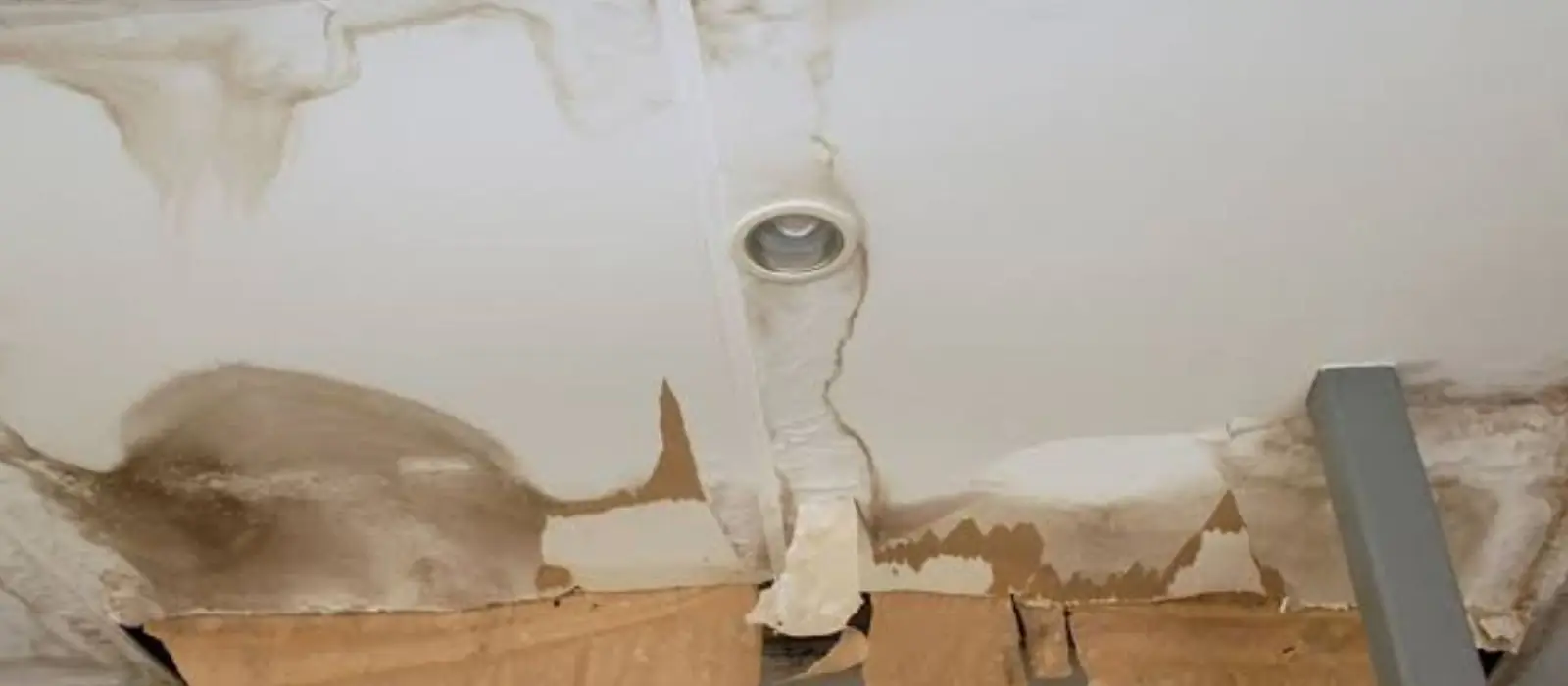
Ceiling damage from water usually starts with a faint tan stain and ends with a sagging, peeling section of drywall. The stain tells you where the water came out, not where it started, so tracing the source is the first job. In Apple Valley, the sources fall into a handful of repeat patterns.
This guide covers those patterns, how to judge a stain, what to do about it and how a permanent patch differs from a quick cover-up. If the ceiling is bulging or dripping, skip ahead to the call box and phone the 24/7 line.
The most common sources above a ceiling
| Source | What the stain looks like | Clue |
|---|---|---|
| Air conditioner condensate line or drain pan | Brown ring, often in a hallway or closet ceiling | Worse in cooling season, near the air handler |
| Roof leak | Irregular stain that grows after rain | Tracks weather, may follow a vent or flashing |
| Upstairs bathroom or washer | Stain below a bathroom or laundry | Grows when the fixture is used |
| Plumbing line in the attic or ceiling | Spot that grows without rain or use | Seen with a hissing sound or damp insulation |
| Water heater in the attic or closet | Stain around the heater location | Rust at the base or the drain pan |
In the High Desert, long cooling seasons make condensate overflows a leading cause. Roof leaks show up after storms, which are rare here but real.
How to read the stain
- A tan or brown ring with a darker edge is an older leak that has wetted and dried more than once.
- A stain that is damp or cool to touch is active or has not dried.
- A bubble or bulge means water is trapped and the drywall is heavy.
- Peeling paint and a soft texture mean the paper face has been wet for a while.
- A stain that stays the same size after a long dry spell may be old, but the source still needs to be confirmed.
Mark the edge of the stain with a pencil and date it. If the stain grows, the leak is active, no matter how dry the weather has been.
What to fix first
Find and stop the source before touching the ceiling. A plumber handles a supply or drain line, an HVAC technician clears a condensate line and a roofer handles a roof leak. Patching a ceiling before the leak is fixed throws away materials.
Once the source is controlled, the wet drywall and insulation need to be dried or removed. Sagging drywall is heavy with water and should not be left in place, because it can fall. A crew will release the water in a controlled way and cut out the wet section, as described under water mitigation.
Ceiling sagging or dripping?
Call (760) 769-1159 any hour. Keep clear of the area and tell the dispatcher what you see.
A permanent patch compared with a cover-up
| Approach | What it involves | Likely result |
|---|---|---|
| Paint over the stain | Primer and paint on the stained area | Stain bleeds through again, trapped moisture may remain |
| Stain-blocking primer only | Seal the stain after the source is fixed and area is dry | Works for a dry, old stain on sound drywall |
| Cut out and patch | Remove wet or weak drywall, replace, tape, texture and paint | Permanent when the source is fixed and the cavity is dry |
| Replace the whole ceiling | Remove and replace full ceiling sections | Best for large losses, gives a uniform finish |
A permanent patch includes drying the cavity, replacing insulation if it was wet, taping and texturing to match, priming with a stain blocker and painting. Skipping the drying is the usual reason a patch fails. The repair side of the job is covered by water damage repair.
Apple Valley local note: storms and sewer lines
Rain is uncommon here, but it can be heavy. The National Weather Service reported torrential rainfall across mountain and desert communities during Tropical Storm Hilary in 2023. If you saw new ceiling stains after that storm or a later one, that points toward the roof, flashing or a vent penetration.
If a ceiling stain appears below a bathroom and you suspect a drain problem, ask whether your home is on the sewer or a septic system. The Town of Apple Valley utilities element states that roughly 30 percent of development is connected to the sewer and the rest is on septic systems, which matters when a drain line is part of the cause.
The same advice applies in nearby cities such as Adelanto and Victorville, where each city runs different utility arrangements.
After the patch: what to watch
A repaired ceiling needs a short probation period. Over the next few weeks, check it in different conditions. Run the air conditioner for a full cycle, use the fixture above the ceiling, and look again after any rain.
- Look for a faint ring returning at the edge of the patch
- Press gently on the patch to check that it is firm
- Smell the room for any musty odor, especially in closets
- Keep the photos and readings from before the repair for comparison
Professional drying follows the published ANSI/IICRC S500 standard, which classifies water by source and sets how wet materials are monitored until they reach a dry standard. Ask any company you hire how they document that.
If the stain returns, the source was not fully fixed or moisture remained in the cavity. Call early, because a recurring stain is cheaper to handle than a recurring collapse.
What your insurer may ask for
Insurers often ask for photos of the ceiling before and after, a description of the source and a repair estimate. The California Department of Insurance advises policyholders to make temporary repairs to prevent further damage and to keep a log of calls and correspondence. Sudden and accidental damage is often covered while gradual leaks often are not, so check your policy.
Frequently asked questions
Is a ceiling stain dangerous?
A stain alone is not an emergency, but a bulge, a drip or a sagging section is. Keep clear of those areas and call.
Can I paint over a water stain?
Only after the source is fixed and the area is dry. Otherwise the stain returns and trapped moisture can cause mold.
Why does my ceiling stain appear in summer without rain?
In the cooling season an air conditioner condensate line or drain pan is a frequent cause. A clogged line spills into the ceiling below.
How do I know whether the ceiling can be saved?
Drywall that is firm, flat and dry can often stay. Soft, sagging or repeatedly stained drywall is usually replaced.
Is a ceiling leak after a storm covered by my insurance?
Roof-related water damage is often covered when it is sudden. Wear and neglect are often excluded, so check your policy and ask your insurer.