
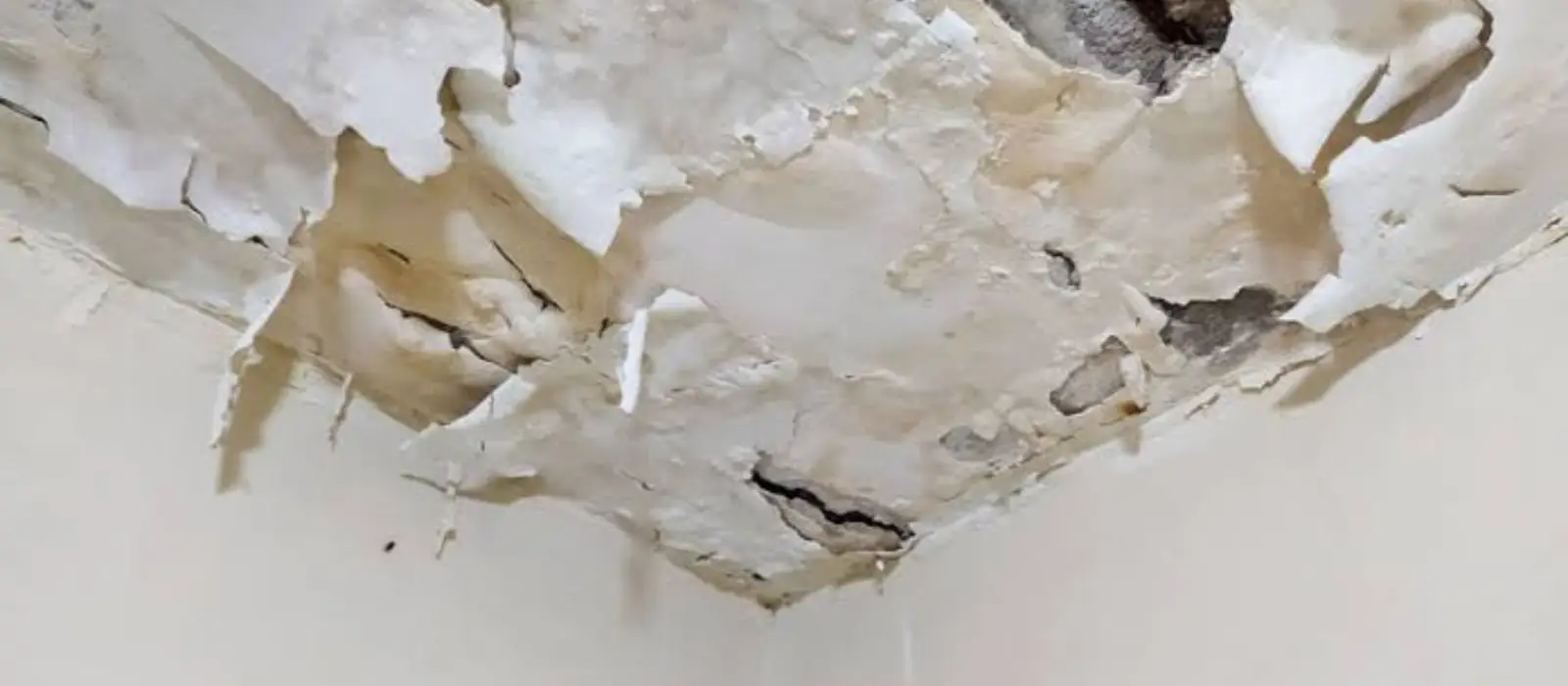
When a ceiling is damaged by water, the first hour matters more than the whole week that follows. A bulging ceiling holds weight in a way you can not see, and drywall can let go without notice. In Apple Valley, ceilings fail from the same few causes, which are plumbing above, a roof opening or an air conditioner drain.
This page is written for the moment. It lists the safe steps in order, tells you what not to do and explains what a crew will do when it arrives. The 24/7 line is open at any hour, so call as soon as you have made the area safe.
Step one: make the room safe
Electricity and water do not mix
If water is coming through a light fixture, a ceiling fan or near outlets, do not touch it. Leave the room and cut power only if you can reach the panel while standing on dry ground. Call the utility or 911 for any electrical concern before you call our line.
- Keep people and pets out from under the ceiling
- Do not stand directly beneath a bulge
- Move furniture and valuables out of the water path
- Place buckets and plastic sheeting where water is falling
A heavy ceiling can drop. If it is sagging in the middle, treat that section as unsafe until it has been released and inspected.
Step two: stop the source if you can
Shut off the main water valve if the water is coming from plumbing, including an upstairs bathroom or washer. If you do not know where the water comes from, shutting off the main is the safest guess. If the source is a roof opening, cover it from above only if you can do it safely, and never climb on a wet roof.
For an air conditioner, turn the system off if the water is coming from the condensate line or pan. Running it can keep feeding the leak.
Step three: relieve a bulge only if it is safe
A small bulge in a ceiling with no fixtures nearby can sometimes be drained in a controlled way. A small hole at the lowest point of the bulge, with a bucket below, lets the water out in a stream and relieves the weight. It is better than waiting for the section to fall.
Do not do this near light fixtures, fans, smoke detectors or wiring. If you are unsure, leave it for the crew. A professional will drain the ceiling and cut out wet drywall in a controlled way, as described under water mitigation.
Ceiling bulging or dripping now?
Call (760) 769-1159 any hour. Keep clear of the area and tell the dispatcher what you see.
What to do and what not to do
| What you see | Do this | Avoid this |
|---|---|---|
| Drip from a light fixture | Leave the room, cut power at the panel if safe, call the utility or 911 if needed | Touching the fixture or turning it on |
| Bulge with no fixtures | Keep clear, place a bucket, call the line | Standing under it |
| Stain that is damp | Mark the edge, find the source | Painting over it |
| Dripping after rain | Collect water, photograph, call for help | Climbing on a wet roof |
| Water after a toilet or tub overflow upstairs | Shut off the fixture valve | Using that fixture again |
What the crew does when it arrives
- Confirms safety and shuts off remaining sources.
- Drains the ceiling cavity in a controlled way.
- Cuts out wet drywall and removes wet insulation.
- Maps moisture with a meter and thermal camera.
- Extracts water from the floor below and sets drying equipment.
- Documents the loss with photos and readings for your insurer.
Repair comes after drying. Water damage repair replaces drywall, textures and paints once readings are at the dry standard.
Apple Valley local note: utilities and storms
Know which utility serves your home. The Town of Apple Valley utilities element names Apple Valley Ranchos Water Company as the primary water service provider in town and Golden State Water as another, so check your bill. The meter and street valve belong to the utility, and the main shutoff at the house is yours.
Storms are the other local trigger. Tropical Storm Hilary in 2023 brought torrential rainfall to mountain and desert communities across Southern California according to the National Weather Service. A roof that rarely sees heavy rain may show every weak spot at once.
In Victorville and Hesperia, the water providers differ, and the city pages explain who to call.
Protecting the room below
While the crew is on the way, protect what you can. Move furniture out of the water path, and cover what you cannot move with plastic sheeting. Put electronics on a high shelf in another room. Roll up rugs and set them aside, because wet rugs stain floors.
- Keep a bucket under each active drip and empty it before it fills
- Do not use a wet vacuum if water is near outlets or cords
- Keep children and pets out of the room
- Photograph the ceiling, the floor and any damaged belongings
Resist the urge to mop constantly while the ceiling is still dripping. Wait until the source is stopped and the ceiling is safe, then let the crew extract water from the floor.
Document, then protect your claim
Take photos of the ceiling, the room and the source before anything is moved. The California Department of Insurance advises making temporary repairs to prevent further damage and keeping a log of calls and letters. Sudden and accidental damage is often covered. Check your policy and ask your insurer.
Frequently asked questions
Should I poke a hole in a bulging ceiling?
Only if it is away from fixtures and wiring and you can do it safely, with a bucket below. If you are not sure, keep clear and call the line.
Can a wet ceiling collapse?
Yes. Drywall that is saturated is heavy and can drop. Stay out from under any bulge or sag.
Do I need to turn off the power?
Only if water is near fixtures or outlets and you can reach the panel while standing on dry ground. Call the utility or 911 for any electrical concern.
How fast will a crew arrive?
A crew is sent the same day when one is available. We do not promise an arrival time, and the dispatcher tells you what to do while you wait.
Why did my ceiling leak when it has not rained?
An air conditioner condensate line, a plumbing line or an upstairs fixture is the usual cause when the weather is dry.