
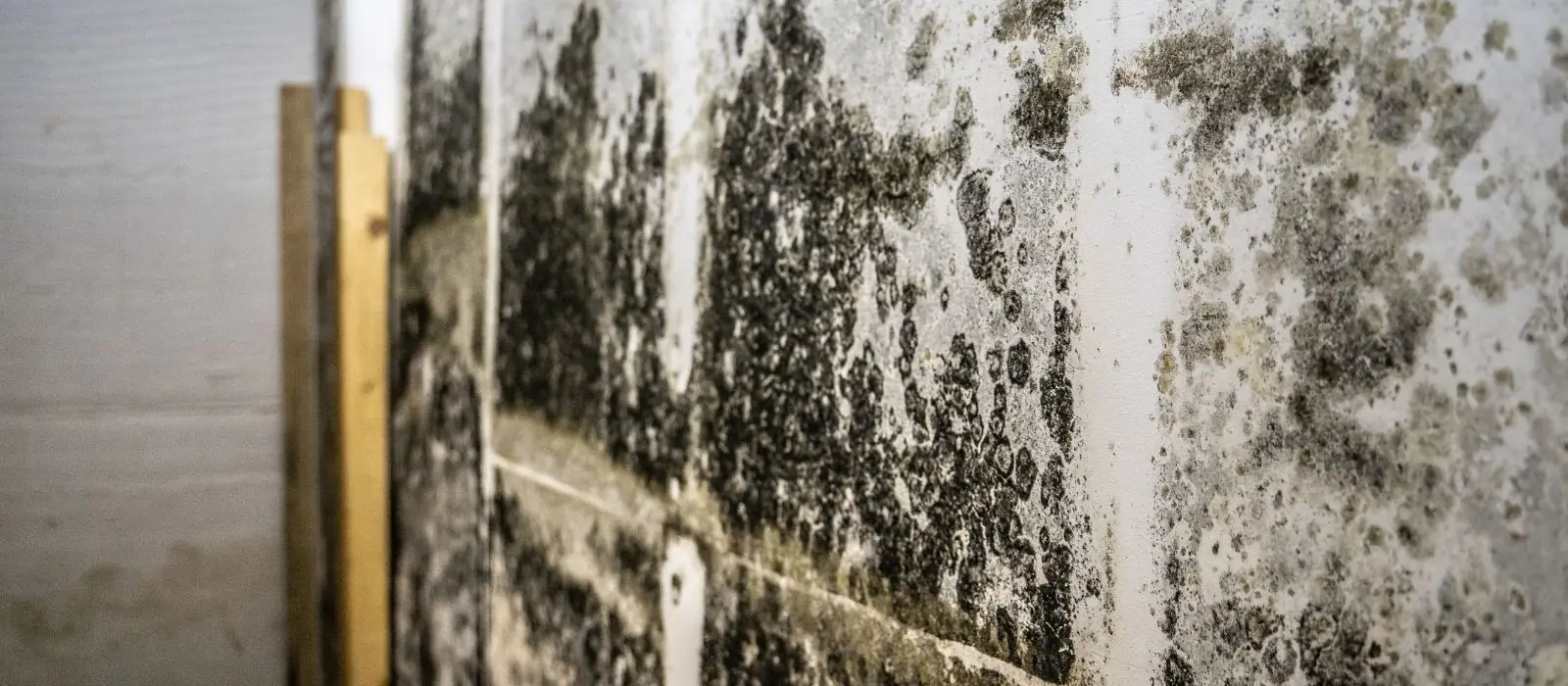
If you want to eliminate mold in a basement, the first thing to know is that the cleaning is the easy part. Mold grows where moisture lingers, so a lower level that stays damp will grow it again no matter how well you scrub. The real work is finding where the water comes from and stopping it.
This guide gives a practical order of work for Apple Valley homes with basements, below-grade rooms or lower garages. It also explains what a homeowner can reasonably do and when a professional is the better choice. Questions about health effects belong with a physician.
Step one: find the moisture source
| Possible source | How to check | Who fixes it |
|---|---|---|
| Plumbing leak above or in the wall | Moisture meter along the wall, water meter test | Plumber |
| Water entering through walls or floor after rain | Look for staining and efflorescence after storms | Drainage or waterproofing specialist |
| Condensation on cold walls and pipes | Dampness on surfaces but dry behind | Insulation and ventilation fixes |
| Past flood or backup that never fully dried | Musty smell, damp carpet or low wall staining | Restoration crew for drying |
| Air conditioner or water heater leak | Check drain pans and connections | HVAC technician or plumber |
If you cannot find the source, a moisture meter and thermal camera can narrow the search. That is part of the assessment on the mold remediation page.
Step two: decide whether this is a do-it-yourself job
The U.S. Environmental Protection Agency says that if the moldy area is less than about 10 square feet, in most cases you can handle the job yourself. For larger areas, or when mold follows water damage or contaminated water, it advises calling in a professional.
| Situation | Usually a homeowner job | Usually a professional job |
|---|---|---|
| Area size | Under about 10 square feet | Larger than that |
| Surface | Hard, non-porous such as sealed concrete or tile | Drywall, insulation, carpet, wood framing |
| Cause | A fixed, clean-water leak | Sewage, flood water or an unknown source |
| Recurrence | First time, dry now | Keeps returning |
| Health concerns | None known | Ask a physician before cleanup |
Not sure whether it is a small job?
Call (760) 769-1159. We explain the inspection and scope before work starts.
Step three: clean the small job properly
For hard surfaces, the EPA says to scrub mold off with detergent and water and to dry completely. Porous materials such as ceiling tiles and carpet may have to be thrown away if they become moldy. It also says not to paint or caulk moldy surfaces, because paint applied over mold is likely to peel.
- Fix the moisture source first.
- Move belongings out of the area.
- Wear protection suited to the work and ventilate the space outdoors where possible.
- Scrub hard surfaces with detergent and water, then dry them fully.
- Bag and discard porous materials that have mold growth.
- Run a dehumidifier and monitor the area for a few weeks.
Do not run the HVAC system if you know or suspect it is contaminated. The EPA advises against that.
Step four: large jobs and what professionals do
A professional job follows the ANSI/IICRC S520 standard. It sets containment, runs HEPA air filtration, removes affected drywall and insulation, cleans framing and verifies dry readings. It can include clearance testing from an independent tester after removal.
If a flood or sewage loss started the problem, flood damage restoration covers the cleanup and drying that comes before remediation. Wet materials left in place feed mold, and removing them is part of getting the job done.
Step five: keep the space dry
- Run a dehumidifier and empty it on schedule or drain it by hose
- Keep gutters and downspouts clear and direct water away from the foundation
- Store items off the floor and away from exterior walls
- Use a hygrometer to monitor humidity in the lower level
- Respond to any new leak the same week
Monitoring matters because mold depends on moisture, not on the calendar. A lower level that reads dry month after month is the best sign the job worked. We do not promise that mold will not return, since that depends on conditions in your home.
Monitoring after the cleanup
Cleaning is the start, not the finish. For the next few weeks, keep notes. Check the humidity reading every few days. Look at the corners, the base of walls and the backs of stored items. Smell the space after it has been closed up for a day.
A dry reading and no odor week after week is the result you want. If a spot returns, take a photo, check for a new source and call before it grows. Returning mold is a sign that moisture is still reaching the area, not a sign that you cleaned poorly.
If you plan to finish the lower level later, wait until the space has stayed dry for a full season. Finishing a damp space builds the problem into the walls.
Apple Valley local note: storms, permits and where to ask
Heavy rain is not common in the High Desert, but it does happen. The National Weather Service reported torrential rainfall across mountain and desert communities during Tropical Storm Hilary in 2023. If your lower level had a damp patch or musty smell after a storm, that is a clue to roof drainage, grading or a wall that lets water in.
Removing and rebuilding drywall is usually surface work, but opening framing or changing plumbing may involve a permit. The Town of Apple Valley Building and Safety Division does plan review and inspection through the Permit Center, so call before you start anything structural.
If your home is in Hesperia or Adelanto, ask the city building department instead, since each sets its own rules.
Frequently asked questions
Can I get rid of basement mold with a dehumidifier alone?
A dehumidifier controls moisture and helps prevent growth, but it does not remove existing mold. Affected materials still need cleaning or removal.
How big is too big for a do-it-yourself cleanup?
The EPA uses about 10 square feet as the rough limit for homeowner cleanup. Larger areas, porous materials and contaminated water are professional jobs.
Will sealing the walls with paint stop mold?
No. The EPA advises against painting over moldy surfaces. Clean or remove the material, fix the moisture, then finish.
How do I tell if my lower level has a leak?
Look for staining that appears after rain or use of fixtures, use a moisture meter and check your water meter with everything off.
Do lower levels in Apple Valley need permits for mold work?
Surface cleaning does not. Framing, plumbing or electrical changes may, so ask the Town of Apple Valley Building and Safety Division.