
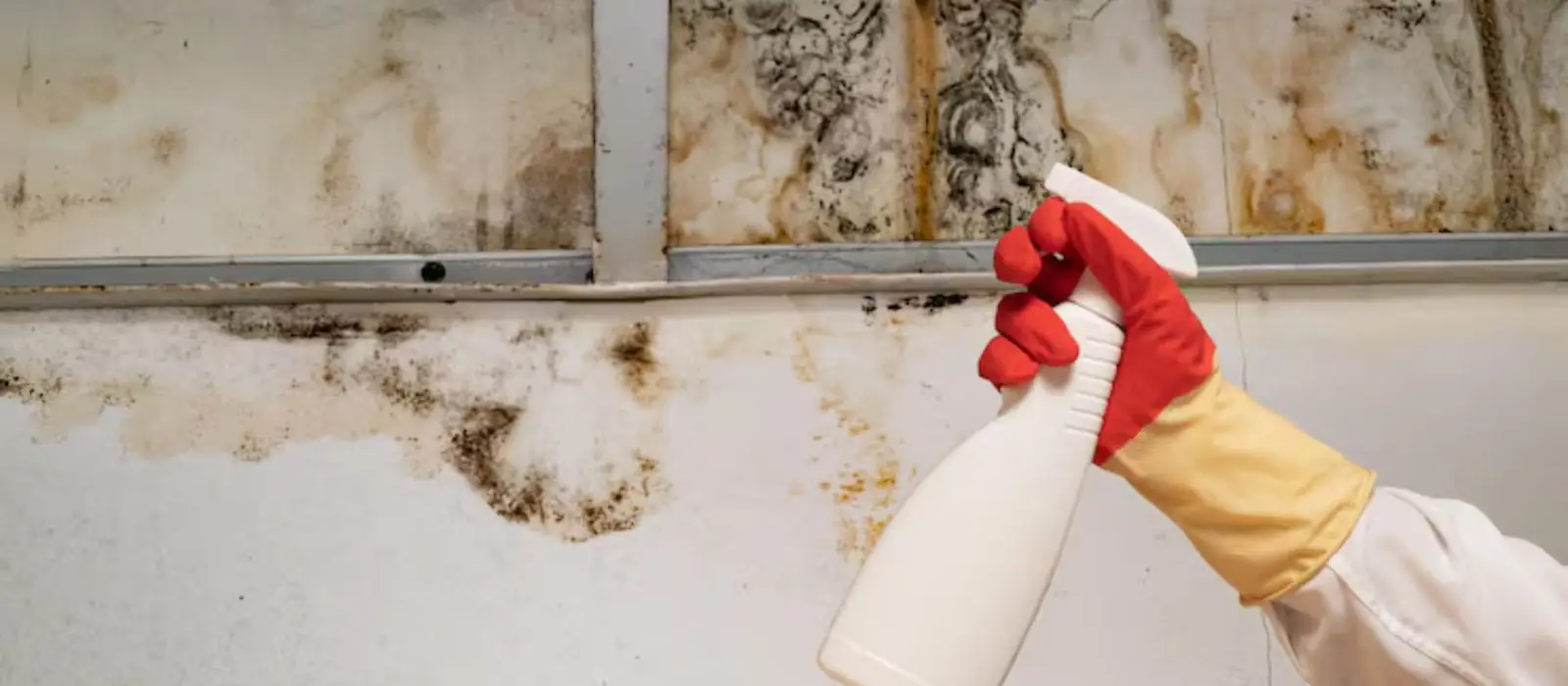
Learning how to get rid of mold on wood starts with an unpleasant fact. Wood is porous, so mold on it is rarely only on the surface. How deep the growth goes depends on how long the wood stayed wet, what finish it has and what job it does in your house.
This guide sorts wood into the kinds you actually find in an Apple Valley home, from a dining chair to a floor joist. It explains what can be cleaned, what should be replaced and when a structural member needs a professional.
Match the approach to the wood
| Wood type | Typical situation | Usual approach |
|---|---|---|
| Finished furniture and cabinets | Spots after a leak or storage in a damp space | Clean the finished surface, dry, replace if the wood is soft |
| Painted trim and baseboards | Growth after a wall got wet | Remove, clean the wall, replace trim |
| Plywood and OSB subfloor | Mold on the underside after a leak | Clean and dry light surface growth, cut out soft or deeply stained sections |
| Solid hardwood flooring | Mold between boards after flooding | Often removed if growth is in the boards |
| Wall framing and joists | Mold on lumber inside an opened wall | Clean and dry with professional containment |
| Outdoor wood such as fences and decks | Surface growth from sprinklers or shade | Clean with detergent and water, improve drainage |
Small jobs on finished wood
The U.S. Environmental Protection Agency says that for a moldy area under about 10 square feet, in most cases you can handle the job yourself. On hard surfaces it advises scrubbing off mold with detergent and water and drying completely. That fits finished furniture and sealed wood, where the finish keeps moisture out.
Bare, unfinished or damaged wood is different. Water gets in, and cleaning the top does not reach what is below. If the wood is soft, stained deeply or smells musty after cleaning, it is probably time to replace it.
- Move the piece to a dry, ventilated place.
- Scrub the surface with detergent and water.
- Dry completely, using a fan and a dehumidifier.
- Check for soft spots by pressing with a screwdriver tip.
- Replace anything that crumbles or stays damp.
Mold on wood inside a wall or floor?
Call (760) 769-1159. We explain the inspection and scope before work starts.
Framing and subfloors: why they are different
Structural lumber and subflooring carry weight, so removal is not a casual decision. A joist with surface mold can often be cleaned and dried in place, and a joist that has lost strength has to be repaired by a qualified trade. A moisture meter and an inspection tell the difference.
Professional crews clean framing with HEPA vacuums and detergent, and they dry the cavity before it is closed. Containment keeps spores in the work area. The ANSI/IICRC S520 standard guides the process. If the mold followed a flood or sewage loss, the earlier steps are part of flood damage restoration.
Because the wood is part of the structure, rebuilding after remediation may need a permit and an inspection. Ask your building department before you cut into framing.
Why sanding and sealing are not shortcuts
Sanding mold off wood spreads spores through the air and leaves them in the dust. The EPA also advises against painting or caulking over moldy surfaces, since paint applied over mold is likely to peel. A sealer may lock in a smell, and it does not dry the wood.
If you have sealed wood and the smell has not changed, it is often moisture inside. Readings show whether the wood is still wet, and drying is the first fix before any finishing.
Apple Valley local note: dry air does not mean dry wood
The High Desert is dry, and many people assume wood here cannot grow mold. Wood grows mold when it stays wet, and it can stay wet for a long time inside a wall or under a floor after a leak. A closed-up crawl space or a closet with a leaky supply line can hold moisture even when the rest of the house feels dry.
Rebuilds that touch framing are inspected by the building department. In Apple Valley, the Town Building and Safety Division handles plan review and inspections through the Permit Center. In nearby cities such as Hesperia and Adelanto, the city department applies.
Storms can start the problem. The National Weather Service reported torrential rain across mountain and desert communities during Tropical Storm Hilary in 2023. Wood that got wet then and was never opened up and dried is worth a moisture check.
Furniture and heirlooms
Wood furniture with sentimental value is worth careful handling. Photograph the piece, then move it to a dry, ventilated room. Do not wrap it in plastic while it is damp, since trapped moisture helps growth.
Surface mold on a sealed finish can often be cleaned with detergent and water, then dried. Mold that has entered raw wood, veneer or upholstery is harder, and a furniture restoration specialist may be the better choice for valuable items. Ask whether the piece should be dried slowly to avoid cracking.
Keep the piece away from the area where the moisture problem occurred until that is solved, or the growth will return.
After the cleanup: prevent a repeat
- Fix the leak or ventilation problem that caused the moisture
- Dry the wood fully and confirm with a moisture meter
- Improve airflow in closets, crawl spaces and attics
- Keep wood off damp floors and away from exterior walls
- Check hidden areas such as under sinks twice a year
If the wood was damaged by a water loss, water mitigation explains the drying process, and water damage repair covers the rebuild once readings are good.
Frequently asked questions
Can mold be removed from wood completely?
Surface growth on finished wood can be cleaned. Growth that has entered unfinished or soft wood often cannot be fully removed, and the wood is replaced.
Should I sand moldy wood?
Sanding spreads spores and is not a shortcut. Clean with detergent and water on hard finished surfaces, or have a professional handle framing.
How do I know whether a joist is still sound?
Press the surface with a tool. Soft or crumbly wood has lost strength and needs evaluation by a qualified trade. A moisture reading shows whether it is still wet.
Can wood grow mold in a dry climate like Apple Valley?
Yes. Wood grows mold wherever it stays wet, including inside walls and under floors after a leak.
Do I need a permit to replace damaged framing?
Structural work may need a permit and inspection. Ask the Town of Apple Valley Building and Safety Division, or the city where the property is located.