
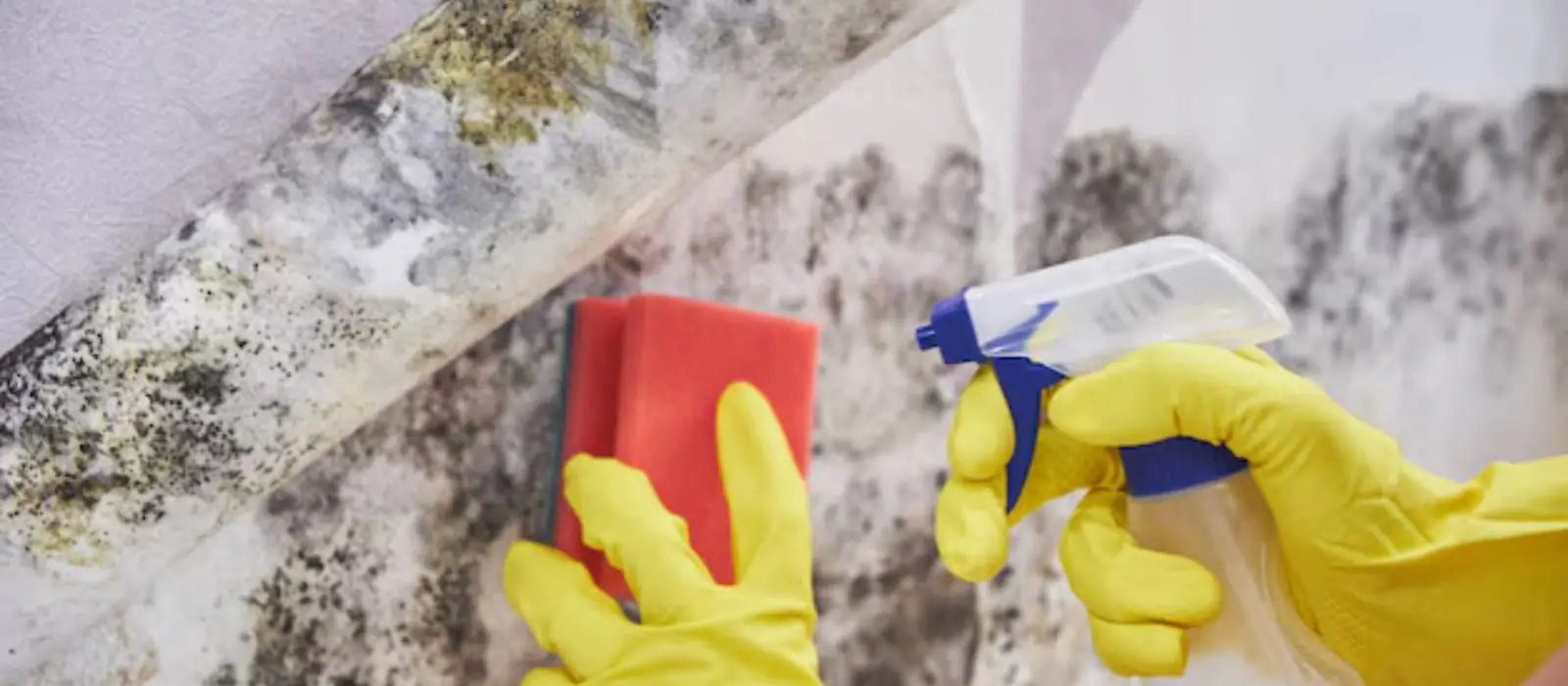
If you are shopping for a product to get rid of mold, start with one fact. No product replaces fixing the moisture. A bottle can change how a surface looks, but it cannot change why mold grew there. In Apple Valley homes, that usually comes back to a leak, poor ventilation or a wall that never dried after a past loss.
This guide sorts common product types by what they actually do. It uses guidance from the U.S. Environmental Protection Agency where it speaks to the question. It is general information and not a recommendation of any brand.
Product types and what they do
| Product or tool | What it can do | What it cannot do |
|---|---|---|
| Detergent and water | Cleans mold from hard, non-porous surfaces, according to the EPA | Remove growth inside porous materials |
| Spray cleaners sold for mold or mildew | Clean and lighten surface growth when used as labeled | Reach growth inside drywall, wood or insulation |
| Dehumidifier | Reduces moisture in the air so new growth is less likely | Remove existing mold |
| HEPA vacuum | Captures fine dust and spores from dried surfaces | Fix moisture or remove stains |
| Stain-blocking primer | Seals a clean, dry stain so it does not bleed through | Be applied over mold, since the EPA says paint over mold will likely peel |
| Mold test kits | Show that spores are present in indoor air, which is normal | Say how much mold is in the wall or where it started |
| Fogging or surface treatments | Treat surfaces during professional work | Substitute for removing affected materials |
The EPA advises scrubbing mold off hard surfaces with detergent and water and drying completely. It also says absorbent or porous materials, such as ceiling tiles and carpet, may have to be thrown away if they become moldy.
Why a spray alone usually disappoints
Mold on drywall paper or wood has roots in the material. A spray that lightens the surface leaves the growth behind, and the dark patch returns once moisture returns. Paint or caulk on top does not solve it either, and the EPA says to avoid it.
Chemical choices raise a separate risk. Never mix cleaning products, and use a product only as its label directs. Ventilate the area, wear protection suited to the product and keep children and pets away.
Cleaned it and it came back?
Call (760) 769-1159. That usually points to moisture, and we explain the inspection and scope before work starts.
The tools that actually help
- A moisture meter, so you know whether the wall is truly dry
- A dehumidifier and a way to drain it
- Detergent, water, scrub brushes and towels for hard surfaces
- Plastic sheeting and tape to separate the work area
- Heavy trash bags for porous materials that must go
- A hygrometer, to watch humidity over time
These tools support the real fix, which is drying and removing what cannot be saved. Professional remediation adds containment, HEPA filtration and verified dry readings, following the ANSI/IICRC S520 standard.
When a product is not the answer
Move to a professional when the area is larger than about 10 square feet, when the material is soft or stained, when water came from sewage or flood, or when mold returns after cleaning. The EPA names these situations as ones where professional help is advised.
Mold after water damage is a drying and removal problem first. Our water damage cleanup page covers how wet materials are removed before they feed growth, and mold remediation covers inspection and containment.
Apple Valley local note: testing, rebuilds and permits
If you plan to replace moldy drywall or trim, the work is construction. The Town of Apple Valley Building and Safety Division performs plan review and inspections, so ask whether a permit applies to your scope. Surface work often does not, while framing and plumbing changes may.
If a lender or buyer wants documentation for a home in the 92307 or 92308 ZIP code, independent clearance testing after removal gives a record they can review. Acceptance is up to them. For homes in Victorville or Hesperia, the same advice applies, and the city building department is the permit authority.
Reading labels and staying safe
Any product you buy deserves a careful read. The label tells you where it can be used, how long to leave it and what protection to wear. Follow it exactly, and do not combine products, since some combinations can release harmful fumes.
- Ventilate the room and open a window or run a fan to the outdoors
- Wear gloves and eye protection suited to the product
- Keep children and pets away until surfaces are dry
- Store products in their original containers, out of reach
- Stop and leave the area if you feel unwell, and speak with a physician
Health questions belong with a physician, not with a product label or a restoration company.
When to call a professional instead
- Do not scrub or spray mold that covers more than a small patch
- Do not use any product on mold you suspect came from sewage or flood water
- Do not mix cleaners, especially anything containing bleach and ammonia
- Stop and call when mold keeps returning after a dry, cleaned surface
What to do first is find and stop the moisture. A product cannot fix a leak that is still feeding the mold.
Where store equipment stops and professional equipment starts
A home dehumidifier and a box fan can dry a small damp area. They cannot dry a wall cavity that is closed up, and they do not provide containment. Professional crews use LGR dehumidifiers, HEPA air filtration and negative air machines so that work in one room does not spread to others.
They also take readings before, during and after the job. That record is what separates a cleaned space from a verified one, and it is what a buyer, lender or insurer would want to see.
A short shopping list that makes sense
- Fix the leak or ventilation problem first.
- Buy a dehumidifier and a hygrometer for the room.
- Use detergent and water on hard surfaces.
- Replace porous materials that are moldy.
- Use a stain-blocking primer only on a clean, dry stain.
- Call a professional for anything large, soft or recurring.
Frequently asked questions
What is the best product to kill mold?
The EPA recommends scrubbing hard surfaces with detergent and water and drying completely. Products cannot replace fixing the moisture and removing affected porous materials.
Can I use a mold test kit?
Spores are normally present indoors, so a kit shows little. A professional inspection with moisture readings is more useful.
Will mold paint solve the problem?
No. The EPA says not to paint over moldy surfaces. Clean or remove first, then use a stain blocker on a dry surface.
Is it safe to mix cleaning products for stronger results?
No. Use each product only as its label says and never mix them. Ventilate and protect yourself.
Do I need to tell my lender about mold in Apple Valley?
Requirements depend on the transaction. Independent clearance testing gives you a record, and the buyer or lender decides what they accept.