
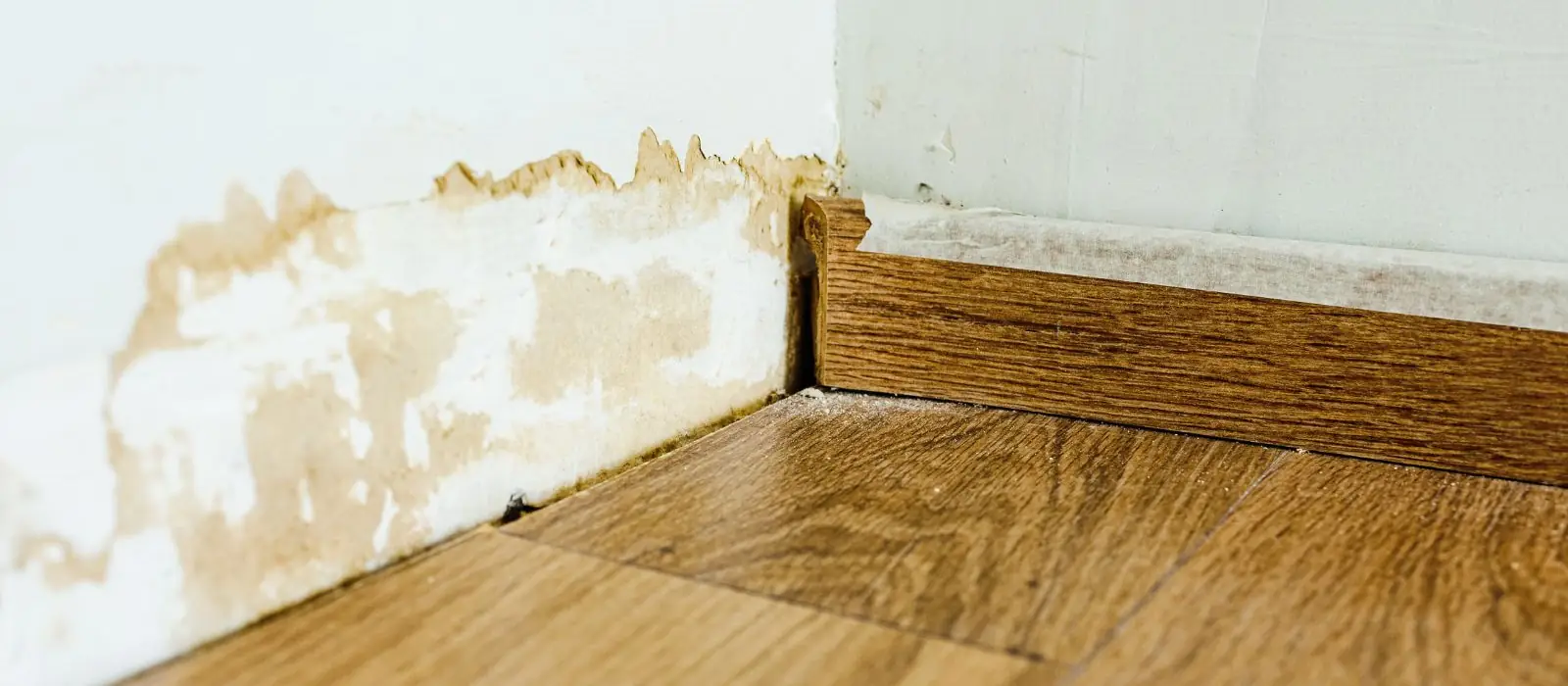
The signs of water damage are easy to miss because water rarely announces itself. A slow leak behind a wall, under a sink or inside a ceiling can run for weeks. By the time a stain appears, the materials around it have usually been wet for a long time.
This guide groups the signs by how you notice them: what you see, what you smell, what you hear and what shows up on a bill. Use it as a walk-through checklist for your Apple Valley home, and call the 24/7 line if anything on it looks active.
What you can see
- Brown, tan or yellow stains on ceilings and walls, often with a darker ring at the edge
- Paint that bubbles, blisters or peels, especially near fixtures
- Drywall that feels soft, crumbles or has a bulge
- Warped, cupped or buckled flooring, and gaps or lifted corners in laminate
- Baseboards that swell or pull away from the wall
- Dark spots on walls, ceilings, grout or the underside of cabinets
- White, chalky residue on masonry or tile from evaporating water
- Rust or discoloration around a water heater, toilet base or under a sink
Photograph each sign and mark the edge of any stain with a dated pencil line. If the mark moves, the leak is active.
What you can smell and hear
A musty, earthy odor in a closet, bathroom or lower cabinet often means moisture trapped in a material. The smell can be present before any stain is visible, and it often gets stronger after the house is closed up for a while.
Sounds matter as well. A faint hiss behind a wall when nothing is running, dripping inside a ceiling or the sound of water moving in a pipe at night can point to a pressurized leak. Turn off all fixtures and listen near water heaters, walls with plumbing and the area around the main shutoff.
What shows up on your bill and your meter
A water bill that rises without a change in how you live is one of the best clues for a hidden leak. Compare the last several bills and look for a jump that does not match your habits.
You can test it yourself. Turn off every fixture and appliance that uses water, read the meter, wait an hour without using water and read it again. If the numbers moved, water is going somewhere. A plumber or leak detection service can find where, and a slab leak is one common cause.
A reading that moved with everything off?
Call (760) 769-1159 if the leak has already damaged floors or walls. We assess moisture and explain scope and price before work starts.
Signs by room
| Room | Common source | Early sign |
|---|---|---|
| Kitchen | Dishwasher, supply line, sink drain | Warped cabinet base, soft floor near the sink |
| Bathroom | Toilet seal, shower pan, supply lines | Loose tile, dark grout, soft floor around the toilet |
| Laundry | Washer hoses and valves | Swollen baseboard, damp wall behind the machine |
| Garage or utility | Water heater, hose bibs, softener lines | Rust, puddles, damp slab edge |
| Bedroom or hallway | Roof, air conditioner condensate line | Ceiling stain, damp closet corner |
| Attic | Roof flashing, vents, ducts | Damp insulation, dark roof deck, rust on nails |
Apple Valley local note: how to check your utility
Start by confirming who supplies your water. The Town of Apple Valley utilities element names Apple Valley Ranchos Water Company as the primary water service provider in town, and it also lists Golden State Water Company as a purveyor serving its own area. Your bill shows which one is yours, and the utility can supply your usage history so you can compare months.
Weather is the second thing to check against. Tropical Storm Hilary in 2023 brought torrential rain to mountain and desert communities across Southern California according to the National Weather Service, and any stain that first appeared after a storm points to the roof, flashing or a vent.
If you live in Hesperia or Adelanto, ask the city or district that bills you for water. Each of those cities runs its own water arrangements, as explained on the respective area pages.
How professionals confirm what you suspect
Your eyes and nose are good first tools, but they cannot see inside a wall. Professionals add a few instruments. A moisture meter reads how wet a material is. A thermal camera shows cooler, wetter areas as color differences on a surface. A small inspection camera can look inside a cavity through a small opening.
| Tool | What it shows | What it cannot do |
|---|---|---|
| Pin or pinless moisture meter | A moisture reading in drywall, wood or concrete | Identify the source by itself |
| Thermal camera | Temperature patterns that suggest moisture | Prove water is present without a meter reading |
| Inspection camera | The inside of a wall, ceiling or crawl space | Replace measurements |
| Hygrometer | Humidity in the room | Tell you where moisture is coming from |
A good assessment combines the tools and writes the results down, so you can compare readings later.
What to do if you find a sign
- Photograph it and mark its edges with a dated line.
- Check the area with a moisture meter, or ask a crew to do it.
- Shut off the water to the suspected fixture or the main valve if the damage is active.
- Dry the area and set a fan if the water was clean and the amount is small.
- Call a plumber for the source and a restoration crew for the water.
- Contact your insurer if the damage is significant, and keep a log of the calls.
Early action keeps small problems small. A damp baseboard caught in the first week is a repair. The same baseboard left wet for a month can be a mold and framing problem. Water damage cleanup and mold remediation cover what happens when it goes further.
Frequently asked questions
What is the earliest sign of hidden water damage?
A musty smell or a water bill that rises without a reason are often the first signs, before a visible stain appears.
Can water damage exist without a visible stain?
Yes. Moisture can sit inside wall cavities, under flooring and in insulation for a long time. A moisture meter or thermal camera can find it.
Is a stain that is dry still a problem?
It may be an old leak, but the source should still be confirmed. A stain that grows or feels damp is an active leak.
Where can I find my usage history in Apple Valley?
Ask your water utility, which is Apple Valley Ranchos Water Company or Golden State Water depending on your address. Your bill shows which one serves you.
Should I worry about a single bubble in the paint?
Check it. A bubble can mean trapped water behind the paint, and a moisture reading tells you whether the wall is wet.